Government Polytechnic, Soraba, under the Directorate of Technical Education, Bengaluru, maintains dedicated academic support systems to reinforce theoretical learning with practical exposure. Central to this are the library and laboratory facilities, which play a vital role in enhancing students’ technical knowledge, research aptitude, and hands-on skills. These facilities support all diploma engineering programs and are structured to meet industry standards as well as academic requirements.
The following sections provide a comprehensive breakdown of the library and laboratory resources available on campus, highlighting their features, academic importance, and contribution to overall student learning.
Table of Contents
Library Facilities – Overview
The campus library functions as an important academic hub where students access books, study materials, and reference content needed to excel in coursework and projects. It is designed to support learning across all branches, including Civil, Computer Science, Electronics & Communication, and Automobile Engineering.
Library Overview
| Library Feature | Details |
|---|---|
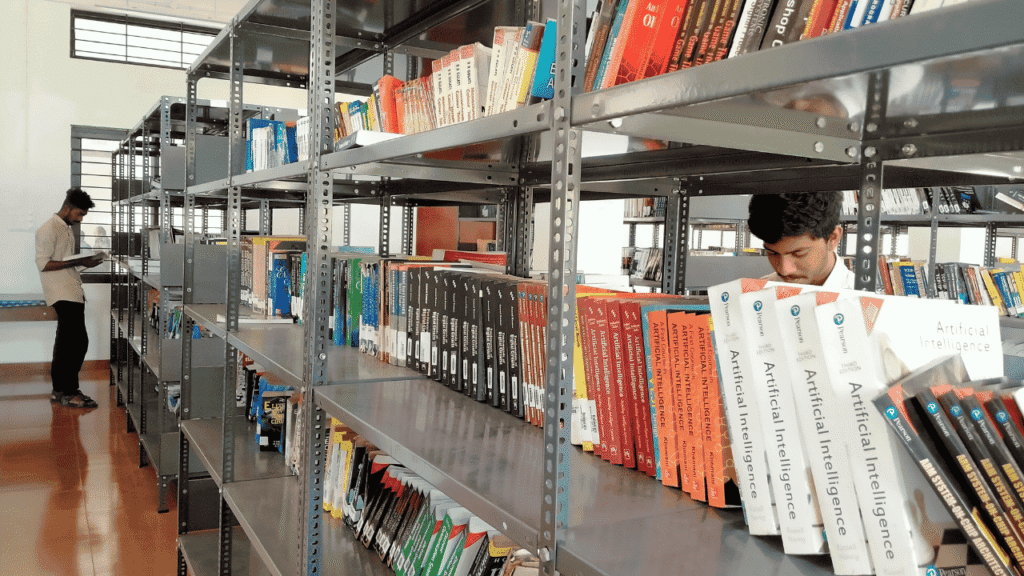
| Book Collection | Core textbooks & reference books across all diploma disciplines |
| Technical Journals | Magazines and journals related to engineering & technology |
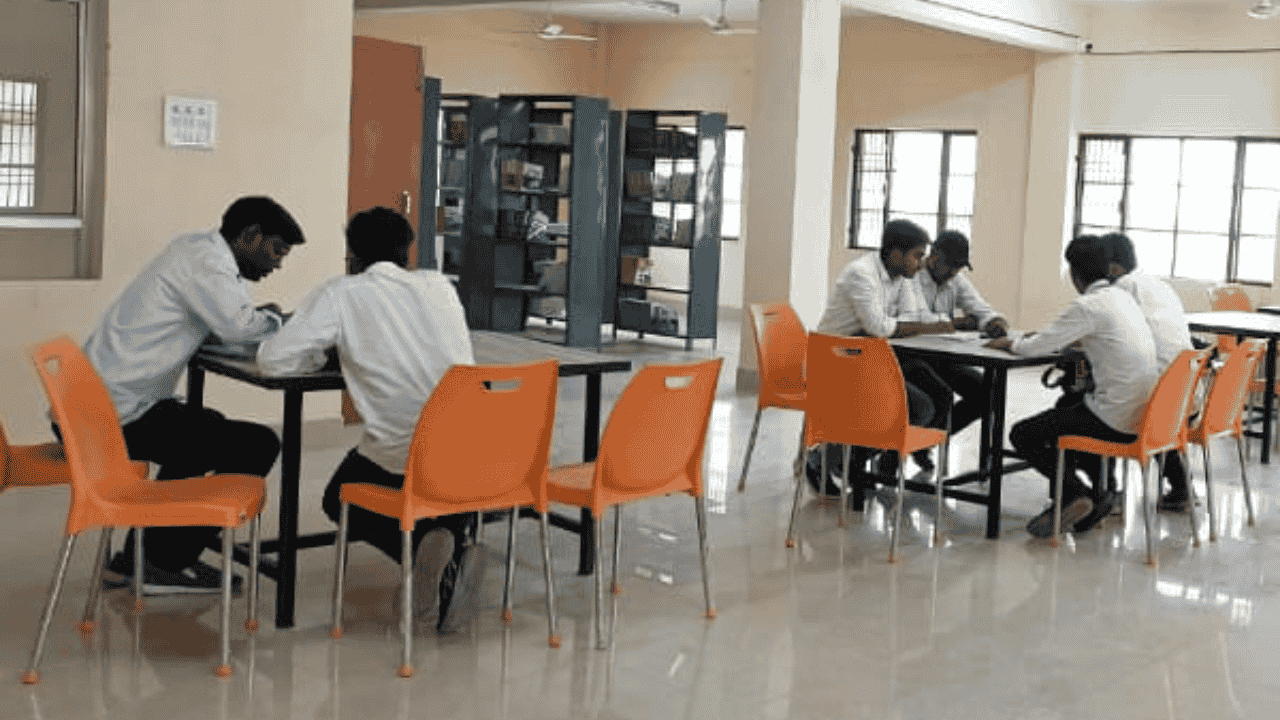
| Reading Space | Quiet study areas with seating for individual study |
| Reference Materials | Syllabus-aligned manuals and competitive preparation resources |
| Student Access | Open during scheduled hours for all enrolled students |
The library collection contains essential academic books aligned with diploma syllabi. Its reference section supports a deeper understanding of engineering subjects and project work. A calm reading area with adequate seating enables focused study sessions.
Library rules often emphasize discipline, proper handling of books, and timely return. Students can borrow specific texts as per the borrowing policy defined by the institute.
Importance of the Library in Academic Success
A solid library system supports students in multiple ways:
- Provides curricular books for semester examinations
- Offers supplementary reading to enhance subject comprehension
- Encourages self-learning and research habits
- Supports preparation for competitive exams and higher studies
Access to diverse academic materials helps students augment classroom instruction with independent study.
Laboratory Facilities – Overview
Laboratories at Government Polytechnic, Soraba, serve as practical learning platforms where students apply theoretical concepts learned in class. Practical sessions are scheduled across semesters and are an integral part of the diploma curriculum requirements.
Laboratory Facilities
| Laboratory Type | Key Equipment / Focus |
|---|---|
| Civil Engineering Lab | Surveying instruments, concrete testing equipment |
| Computer Science Lab | Computers, networking setup, software tools |
| Electronics & Communication Lab | Circuit kits, testing instruments, microcontrollers |
| Automobile Engineering Workshop | Engine models, diagnostic tools, repair stations |
| Workshop Area | Machine tools, fitting & fabrication units |
Each laboratory is staffed by trained instructors who guide students through experiments, project work, and safety protocols. Labs are organized to replicate real-life engineering environments wherever feasible.
Role of Labs in Skill Development
Laboratory experiences are crucial for diploma students because:
- They reinforce theoretical knowledge with real-time experimentation
- Students learn measurement, testing, and analytical techniques
- Hands-on skills enhance employability in technical industries
- Collaborative lab work improves teamwork and problem-solving ability
The Automobile Engineering workshop, for example, allows mechanical and automotive practice, while the Computer Science lab enables software development and networking exercises.
Safety and Management
Safety procedures are strictly observed in all laboratories. Students receive briefings on equipment usage, handling of tools, and emergency response. The institute maintains standard safety gear and clear lab rules to reduce risk and encourage responsible practice.
Instructors monitor lab activities to ensure proper technique and adherence to schedules. Cleanliness and an organized equipment layout help maintain a conducive learning environment.
Integration with Curriculum
Laboratory activities are aligned with academic syllabi so that practical experiments complement classroom lectures. Each academic branch has a set of mandatory lab exercises that students must complete to fulfill semester requirements.
Evaluation of lab performance contributes to internal assessment and overall grading. Structured practical work ensures students graduate with both conceptual understanding and technical proficiency.
Student Projects and Innovation
Beyond regular lab work, the facilities enable project development and innovation:
- Mini-projects in the final semesters
- Group assignments involving design and testing
- Use of lab equipment for creative problem solving
These project experiences prepare students for professional roles and higher studies. Students learn project planning, execution, documentation, and presentation skills through supervised assignments.
Resource Accessibility
Library materials and laboratory access are scheduled to accommodate all students. Timetables are planned so that students get sufficient lab time without conflicting with classroom activities. Staff support helps students troubleshoot technical issues and complete experiments effectively.
Students are encouraged to use labs beyond scheduled hours for project enhancement, subject to supervision and safety compliance.
Contribution to Career Readiness
Exposure to library resources builds research capability and technical comprehension. Laboratory training equips diploma students with practical competencies valued by employers in manufacturing, construction, IT, automotive, and electronics sectors.
Hands-on experience improves confidence, enabling students to transition smoothly into apprenticeships, industry roles, or higher technical education.
Key Takeaways
The library and laboratory facilities at Government Polytechnic, Soraba, form the backbone of academic and practical training. By combining extensive reading resources with well-structured lab experiences, the institute creates an environment where students can excel in theoretical knowledge while developing valuable technical skills.
These facilities not only support curriculum requirements but also nurture student curiosity, innovation, and career readiness in a competitive technical landscape.